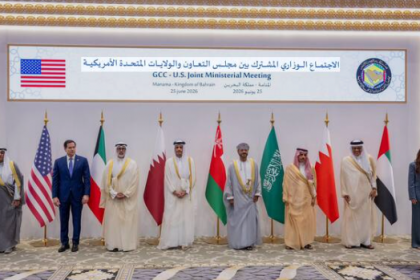


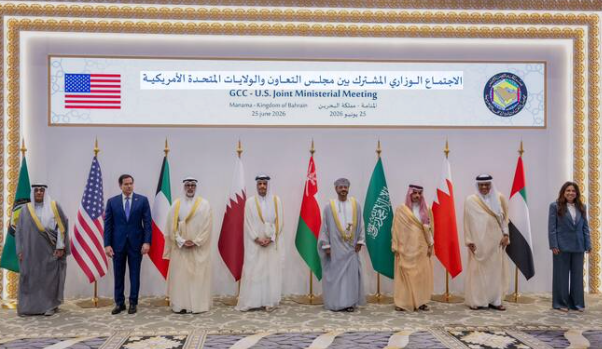
MANAMA, June 25, 2026: Gulf foreign ministers said on Thursday that Iran’s proxy forces, missiles and drones must be dealt with for the region to have lasting peace.
The ministers also said any trade and investment with Tehran would be reversible and contingent on it respecting its deal with the US.
“The Ministers further emphasized that lasting regional peace and security requires addressing the full spectrum of Iran’s threats, including its ballistic missiles, drones, and support of proxies in the region,” they said in a joint statement following a meeting co-chaired by US Secretary of State Marco Rubio.
“Any trade and investment with Iran is conditional and reversible, contingent on Iran’s compliance with the MOU and the final agreement, cessation of its destabilizing behavior, and creation of the conditions necessary for economic engagement,” they added.
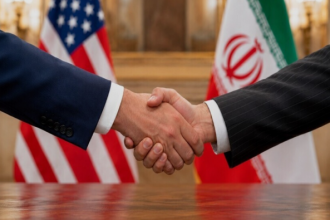
The meeting in Bahrain took place as Iran and the US are engaged in further negotiations after agreeing last week to an initial deal to end the conflict.
Rubio has been in the region for three days, meeting leaders and officials for talks about the negotiations.
A key issue is ensuring that Iran allows the Strait of Hormuz to be fully open to shipping after Tehran shut the waterway during the conflict.
During the meeting, the Gulf foreign ministers emphasized the importance of reopening the Strait and said, “free, unconditional, and unrestricted navigation, including the right of transit passage as guaranteed under international law, remains essential to regional and global security.”
They also rejected any tolls, fees, or attempts to assert control over the Strait, amid concerns that Iran wants to charge vessels for passing through the waterway.
GCC states suffered waves of attacks from Iranian drones and missiles during the conflict as Tehran lashed out at its neighbors in response to US and Israeli bombing.
The foreign ministers said they welcomed the memorandum of understanding between the US and Iran but urged that the two sides maintain momentum in the talks in the hope of reaching a permanent end to hostilities.
The ministers said they shared the objective “of preventing Iran from ever developing or otherwise acquiring a nuclear weapon.”